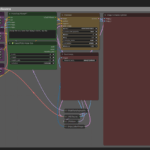
Com todas as explicações dadas nos posts anteriores, uma coisa é importante lembra. Para quem é da área de TI, conhece a piada do Google consumir memória RAM absurdamente. Pois no ComfyUI, não é diferente. Hoje, utilizou uma RTX 2060 SUPER, com 8GB de VRAM, e 64GB de RAM DDR4 no PC. Dá pra brincar, mas quanto mais VRAM tiver, melhor e mais rápida será a brincadeira, todavia, a “facada no bolso será maior. Em breve, pretendo fazer o upgrade para uma RTX 3060 com 12gb de VRAM (a vontade seria 16gb, mas…). Ah, mas as placas da AMD tem um custo melhor que Nvidia. Fato. Porém, pra usar uma placa AMD, primeiramente será necessário usar apenas Linux, e nem sempre obterá o melhor resultado.
Dito isto, utilizando os recursos que tenho, tirei uma foto com meu celular, para servir de referência, e gerei algumas imagens. Abaixo, seguem as imagens e seus devidos Prompts.
Para efeito de comparação e análise, esta foi a foto que usei como referência:

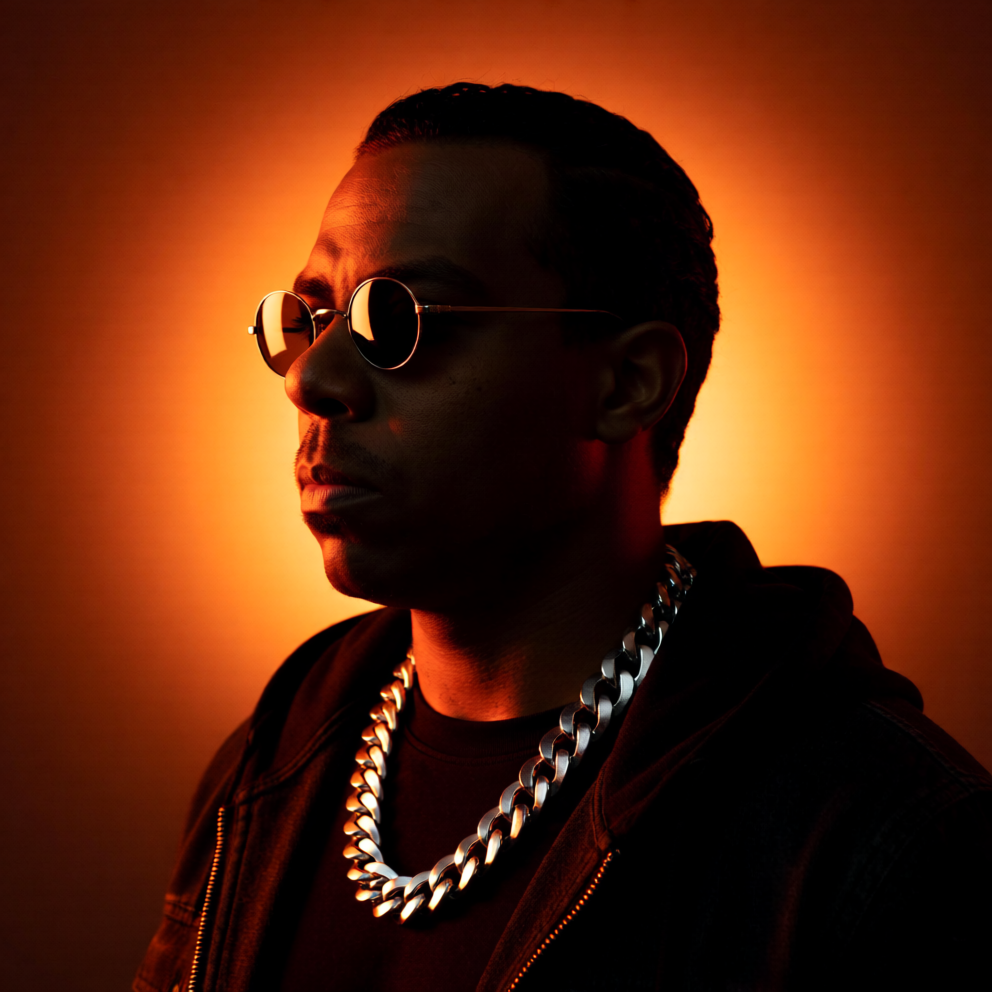
Transform my photo into a cinematic, stylized portrait with bold lighting. Place me against a glowing orange gradient background that creates a radiant halo effect behind my head. Capture me in profile or ¾ view, wearing dark modern streetwear and a thick silver Cuban-link chain necklace. Add small round sunglasses for a cool, futuristic aesthetic. Lighting: dramatic high-contrast lighting, with warm orange backlight illuminating the silhouette and subtle shadows across the face. Camera angle: mid-shot portrait, straight-on or slightly low angle for a powerful look. Lens style: 85mm portrait lens with shallow depth of field, sharp subject focus against soft glowing background. Color grading: rich, cinematic orange and black palette with deep shadows and glowing highlights. Mood: modern, moody, stylish, artistic, capturing a confident and mysterious aura. Texture: clean, polished finish with slight filmic tones, no grain unless a vintage touch is desired. Enhancements: emphasize metallic shine on the necklace, reflections on the sunglasses, and the glowing gradient light behind the subject for maximum drama.
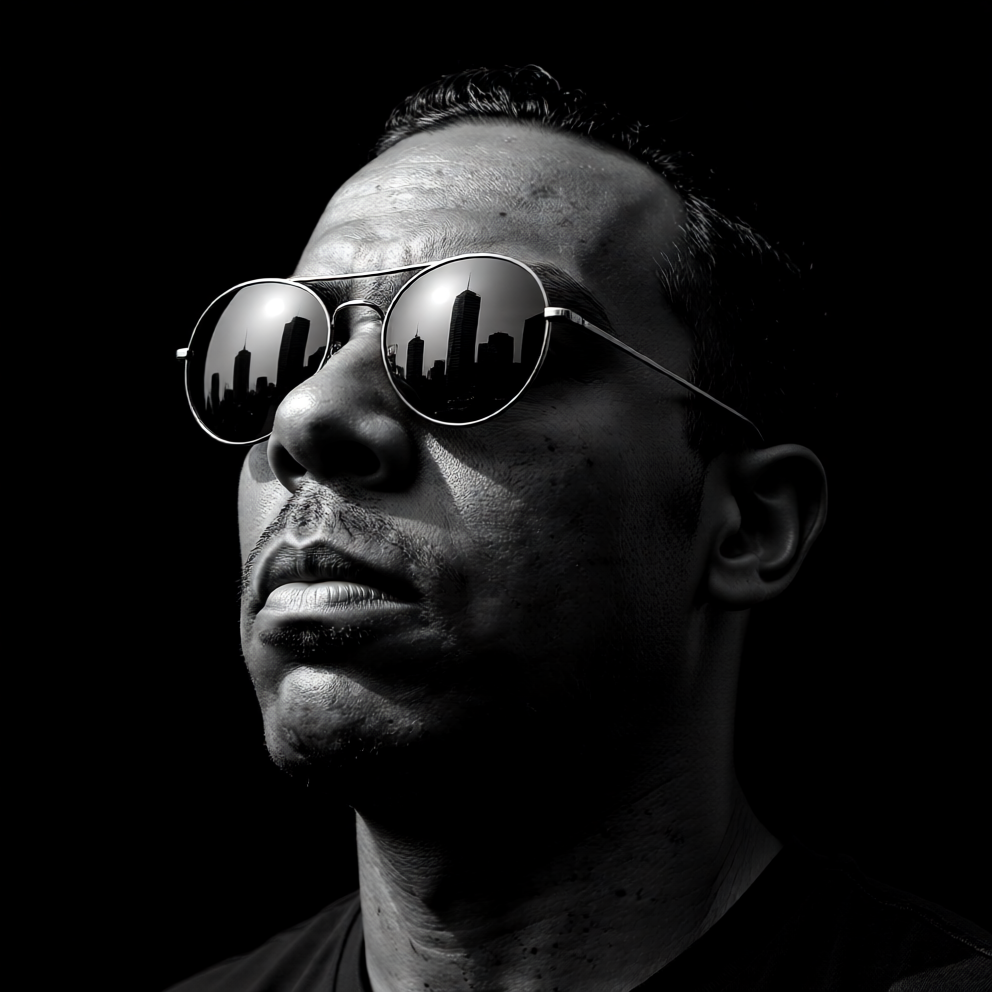
Dramatic, ultra-realistic close-up in black and white with high-contrast cinematic lighting from the side, highlighting the contours of his face and beard, casting deep shadows. He wears round, reflective sunglasses. He gazes confidently upward into a dark void. The sunglasses reflect a city’s towering skyline. The atmosphere is mysterious with a minimalist black background. Details in 4K. Keep the subject’s exact facial structure, hair texture, the original photo.
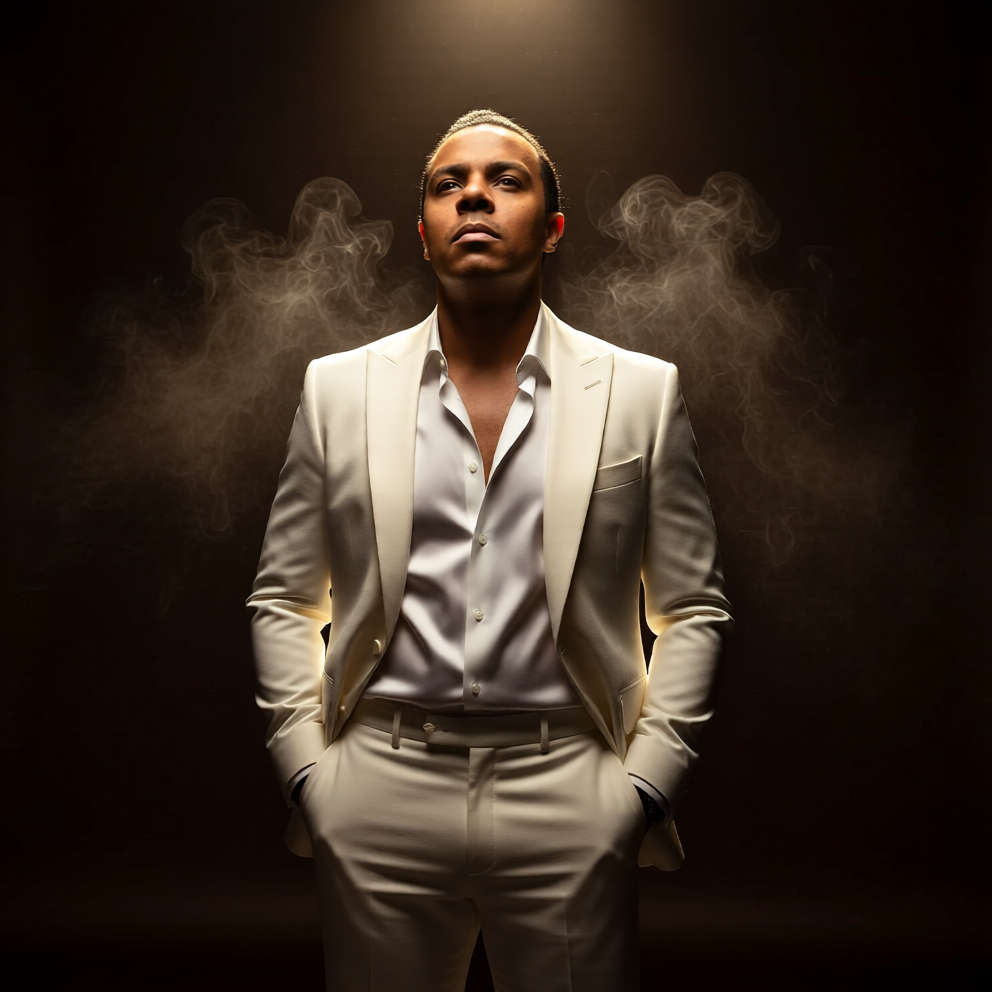
A hyperrealistic cinematic editorial portrait of mine. He stands in a dark, shadowy studio, BROWN in color, surrounded by soft black and white smoke under a dramatic spotlight. Attire: Luxurious white suit with fitted trousers, paired with a slightly unbuttoned white silk shirt. Both hands casually tucked into his pockets, shoulders relaxed, expression confident, head tilted slightly upward.
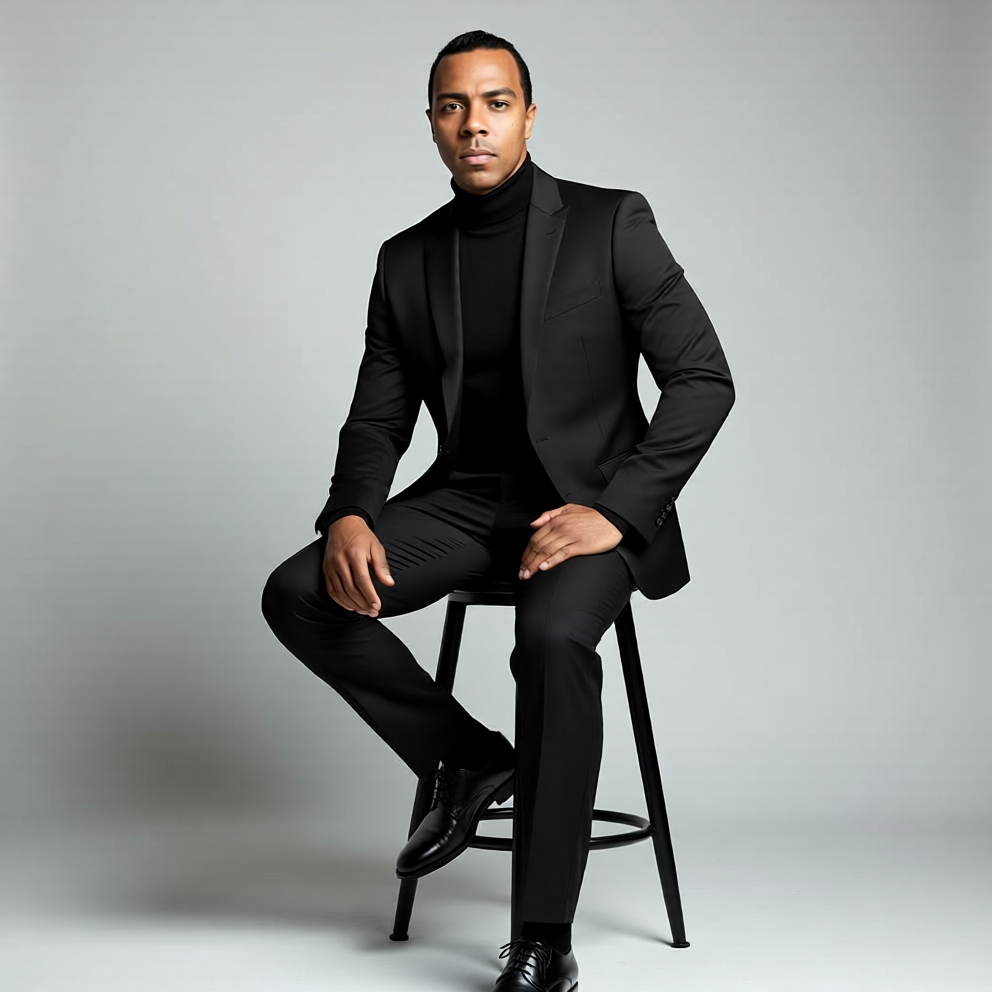
Professional studio portrait of a man sitting elegantly on a high black stool against a plain light gray background. The man must keep his real and original face, without modifications, preserving all authentic features and his natural hair color. Hair neatly styled, clean-shaven face, no glasses. He is wearing a sleek, tailored black suit paired with a black turtleneck shirt, creating a monochrome, modern, and sophisticated look. The trousers are slim fit, perfectly aligned with polished black leather oxford shoes and black socks. Right arm relaxed, resting casually on the leg, left arm bent with the hand lightly holding the stool in a natural pose. Confident, charismatic expression with a direct gaze, evoking elegance and authority.
Soft, even studio lighting enhances the textures of the suit and shoes, creating a high-fashion editorial style. Captured in ultra-high resolution, hyper-realistic, sharp details suitable for a luxury magazine shoot.
Nesta última foto, fiz uma simples alteração, solicitando a inclusão de um iPhone laranja. E o resultado foi esse:
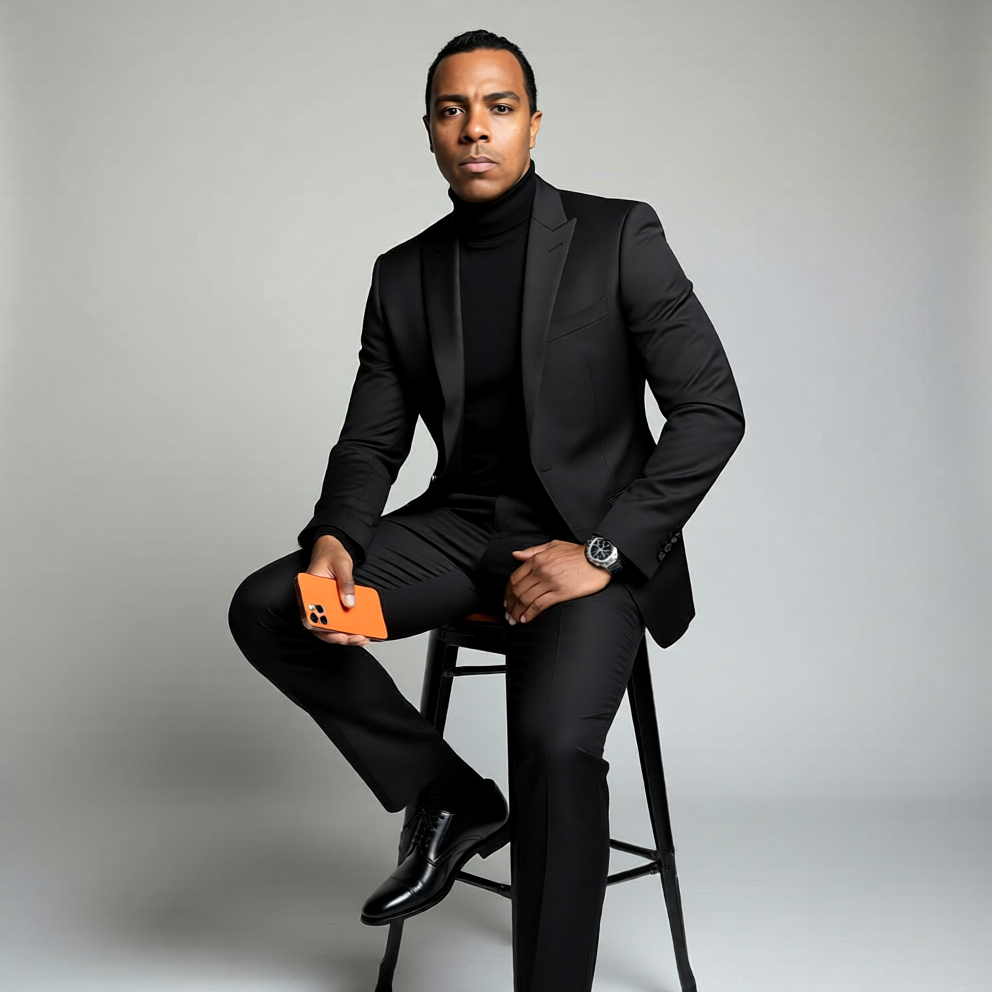
Cada imagem demorou cerca de 4 minutos para ser gerada (viu o que a falta de VRAM faz?). E pensar que a 1 ano, tínhamos que treinar um LORA para gerar imagens nossas. Hoje, basta apenas uma imagem de referência.